Plants
Home > Plants
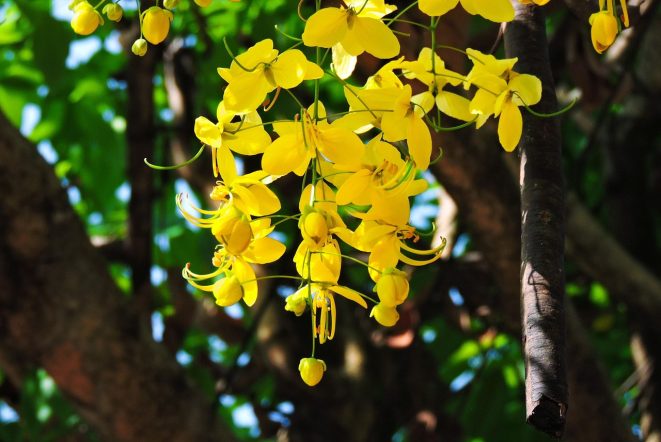
Cassia fistula
Locally known as Amaltas/girmala/kiar/alash
A medium-sized deciduous, ornamental tree with an irregular canopy. Yellowish bark, more or less smooth but got crusty when old. Leaves are feather-compound with 4-8 pairs of large leaflets. Flowers are bright yellow in colour and in long, droopy clusters with 5 petals. Fruits are long, cylindrical pipes which are green when young but later turned into black. Flowering usually occurs during late April or May and fruit mature around March April of the year following flowering. Medicinally, it is useful in skin diseases, cardiac disorders, and intermittent fever and also as an anti-inflammatory.
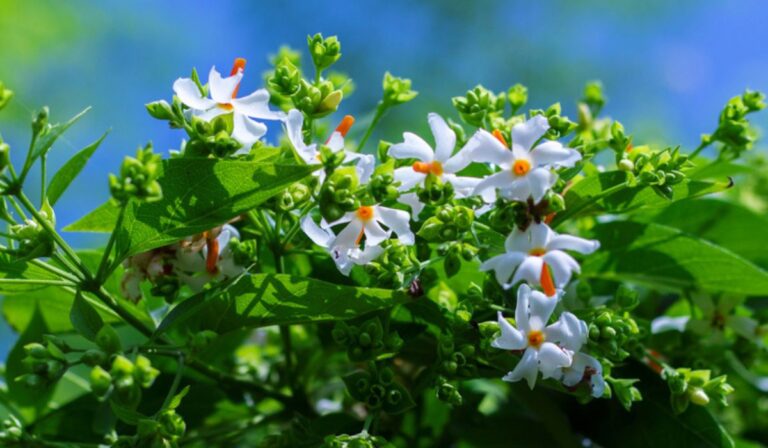
Nyctanthes arbor-tristis
Locally known as harshingar/har/kuri/saherwa
A small deciduous tree with drooping 4-angled branchlets. Bark pale or dark grey in colour, sometimes greenish, rough and wrinkled. Leaves in opposite pairs, dark green, very rough on upper surface, paler and hairy below, margins often large with distant teeth with pointed apex. Flowers white in colour with 5-8 petals at the end of bright orange tube in clusters and are highly fragrant. Fruits are flat, with round capsule bright green at first and later turned brown. Leaves shed in February or March and renewed in June-July. Flowering occurs in August with peaking in September-October. Fruit ripen in April-May.
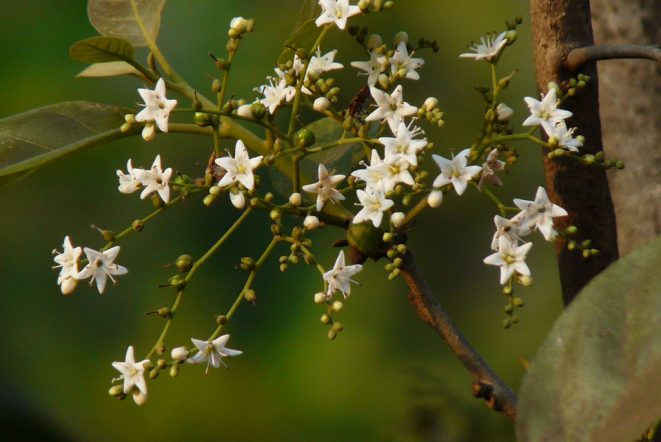
Ehretia laevis
Locally known as chamrod/chambal/desi papdi/sakar
A medium-sized deciduous tree recognised by its pale, knobbly trunk and in season by loose white star shaped flowers. Bark is generally yellowish or grey. Leaves are usually quite broad, hairy at first becoming smooth and shiny lately with a pointed apex. Flowers are small, white star-shaped and present in loose clusters. Fruits are in form of tiny berries, bright orange, turned black when ripe. Prime time of flowering is March. Fruit set very quickly after the flowering, mostly by late March and turned orange in mid- April.







Divya Darsh Kisan (NGO)
Non-profit organization to support people worldwide and keep an eye in the future Support.
Resources
Contact Info
ddkisan.live@gmail.com
+91 8700036763
817/5, Sai Nagar, Mithapur Extension, Mithapur, New Delhi, 110044
COPYRIGHT © 2025 - Divya Darshan Kisan Foundation, All rights reserved
